
Proper Operation
Learn how your appliance is supposed to operate so you can determine if it is malfunctioning.
This page contains affiliate links. For more information visit our
FTC disclosure page.
- Visit our sponsor for parts:

Water Inlet Valve
Problem Discussion
Normally water connot enter the washer unless the inlet mixingvalve solenoids are energized (see Fill under Proper Operation).However, if foreign particles get past the filters, they can become lodged in the tiny valve orifice and prevent the metal plunger stem from seating. Water will then flow through the valve whether the washer power is on or off. Automatic washers are normally left unattended. Water flow during a wash cycle can lodge the foreign particle in the valve, causing the water to continue to flow throughout all of the cycle functions and after the washer has stopped. The tub will fill and then overflow. The only way to stop it is to turn off both water faucets connected to the inlet hoses.
Replacement part no: 358276

Procedures for Replacing the Water Inlet Valve
- After the water is turned off and the floodwaters have subsided, either run the washer in a drain function or unplug the machine and bail it out.
- MAKE SURE THE WASHER IS UNPLUGGED.
- Verify that both water faucets have been turned off.
- Move the washer out from the wall about 20 inches.
- Remove the two 5/16" sheet metal screws securing the water inlet mixing valve (the screws are near the hose connections onthe back of the washer).
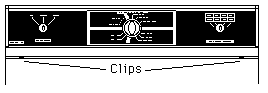
- (Figure 1) Slide a putty knife in between the top and the cabinet, about 3 inches in from each corner. Push in and pull up on the knife handle to release the spring clips securing the top.
- If you have a manual-clean filter, you will not be able to raise the top very far before the recirculate hose restrains further elevation. Open the spring clamp on the hose and slide itdown the hose a couple of inches. Pull the hose off the filter housing and lay it against the inside of the cabinet.
- Slowly raise the top with one hand and hold the lid with the other. Rest the top against the wall.
- Reach down into the rear-left corner behind the tub and pull the water inlet mixing valve, along with its wires and the fill hose, to the top of the cabinet where you have more room to workon it. Open the spring clamp on the valve and slide it down the hose. Pull the hose off the valve.
- (Figure 2) Both valve solenoid coils have a common white wire. The hot water valve solenoid will have the brown with red stripe wire connected to it and the cold water solenoid will have the yellow with red stripe wire. Label the hot and cold solenoids and remove the wires.
- Disassemble the valve that caused the flooding, or if you don't know which one caused the mess, disassemble both of them. Remove the screws securing the coils to the valve housing. Slide the coils off of the plastic or copper guide housing. Pull the guide housing out of the valve body and you will expose the diaphram, the metal stem (armature) and a spring. Look for foreign particles of dirt, sand or metal in the diaphram orifice. If you find something that could have lodged in the orifice, remove it and reassemble everything. If you can't find anything, you have a tough decision to make. You can assume that the cause of the problem has gone away and it won't happen again. However, the valves on rare occasions will not seat properly when the solenoidis de-energized. The first time that a valve does this it should be replaced. The damage that a flooding washer can cause far outweighs the cost of a new mixing valve.
- Replace the hot and cold solenoid wires and the outlet hose. Remount the valve assembly on the rear of the machine. Test for proper operation.
- Unless you replaced the valve with a new one, watch the washer closely for a few washloads to make sure it doesn't flood again.

Click the banner to visit our sponsor to purchase parts:
